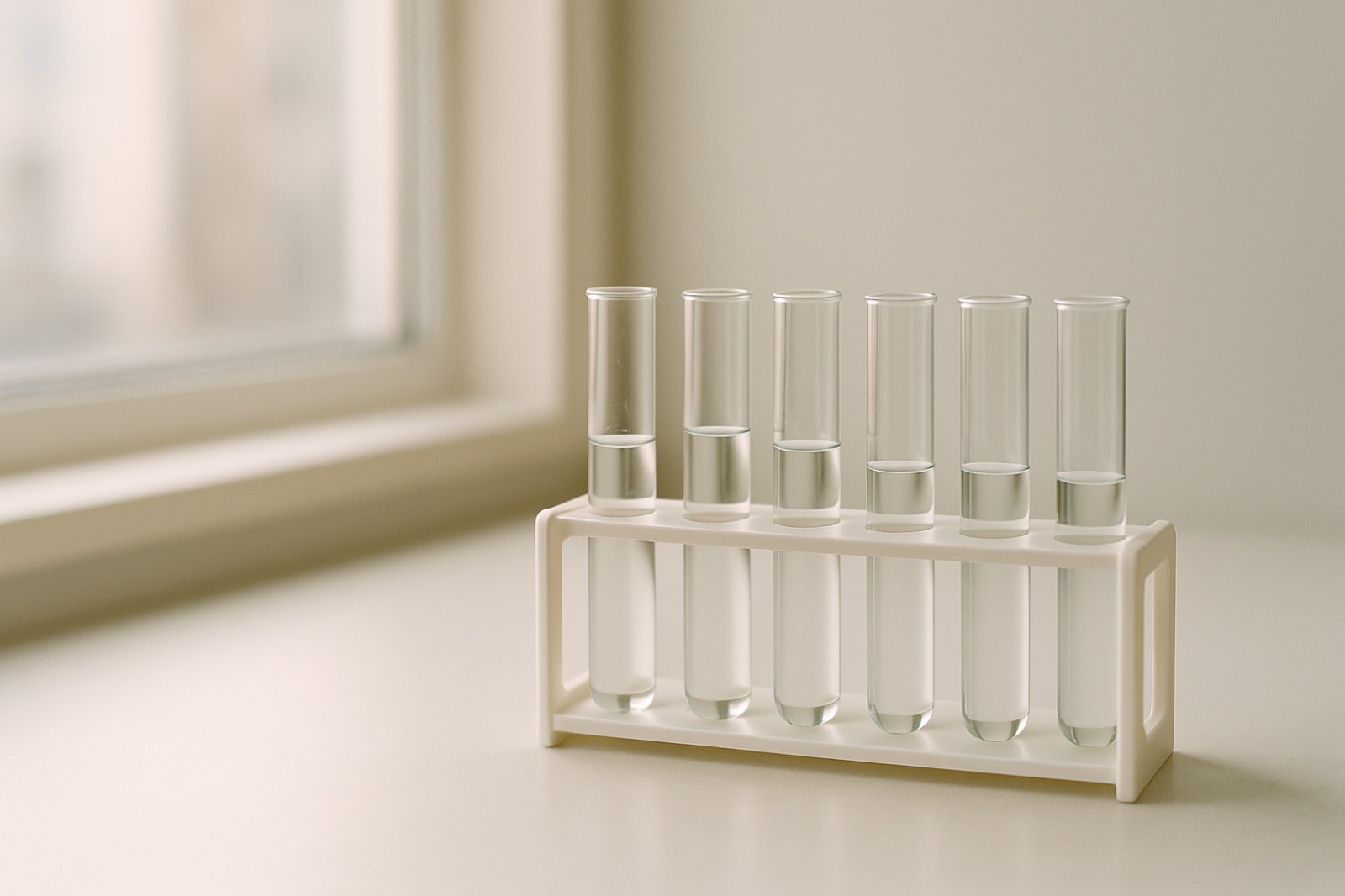
Water trouble often enters a household through an ordinary complaint: spotted glassware, stiff laundry, a scaled kettle, an unfamiliar odor or a water heater that seems less efficient. Those clues matter, but they do not all answer the same question. Some point toward mineral hardness and its effects on plumbing and appliances. Others justify an investigation of the water supply, household plumbing or a possible contaminant.
The distinction becomes especially important when conditions around a source can change. Circle of Blue, in its story on what forest fires may mean for lakes, describes scientists studying wildfire effects on lake systems. The reported research originated after wildfires reached a California mountain lake study area in 2020. For homeowners, the broader lesson is limited but useful: a change in a watershed is a reason to ask better sampling questions, not a reason to infer that a particular tap is contaminated.
First, identify the pattern
White crust on fixtures, spots left after droplets dry, reduced soap lather and mineral accumulation in heated appliances form a pattern consistent with hard water. Hardness generally reflects dissolved calcium and magnesium. Heating or evaporation can make the resulting deposits more visible, which is why kettles, showerheads and water heaters often show the problem first.
Those signs can support a hardness test, but they cannot establish whether water contains microbes, metals, nitrate, volatile chemicals or other substances. Clear water can contain a contaminant, while cloudy or odorous water may reflect air, temperature, a drain problem or reactions within household plumbing. Appearance and smell help locate a problem. They do not identify it reliably.
Skin tightness or irritation after bathing is also nonspecific. Water hardness, temperature, soap formulation and individual sensitivity can overlap. Treat the complaint as a reason to document conditions and compare hot and cold water, not as proof of either hardness or contamination.
Use this diagnostic checklist
Check where the symptom occurs. If it appears at every cold-water tap, the source or incoming service deserves attention. If it appears only at one fixture, inspect that fixture and its branch plumbing. A hot-water-only problem directs attention toward the water heater, temperature and heated-water chemistry.
Check when it occurs. Record whether the problem is constant, follows plumbing work, appears after the house sits vacant or changes after heavy rain or another source-area disturbance. Timing helps a utility, dealer or laboratory choose a defensible sample location and analyte list.
Separate deposits from water. A residue that dissolves readily in mild acid is consistent with carbonate scale, but this household observation is not a laboratory identification. Photograph deposits, note affected equipment and test the water for hardness before selecting a softener or scale-control device.
Look for an external trigger. Utility notices, loss of pressure, nearby construction, flooding, a damaged private well or an abrupt change across multiple taps warrants contact with the appropriate utility or local authority. Follow any official sampling or use instructions rather than improvising a treatment response.
Define the question before ordering a test. A hardness panel answers an equipment and cleaning question. A microbiological test addresses a different concern. Metals testing may require a particular stagnation period and sample tap. Broad, undefined testing can produce numbers without resolving the original problem.
Where professional sampling is appropriate, homeowners can get local water professionally tested. The laboratory or qualified provider should confirm the bottle, preservation method, holding time and sampling protocol before water is collected.
Read results as decisions, not labels
A hardness result indicates mineral concentration and helps estimate scaling tendency, soap demand and treatment capacity. It does not certify that the water is free of contaminants. A contaminant result, meanwhile, should be read with its units, reporting limit, sample location and the benchmark applicable to that water source.
“Not detected” means the laboratory did not measure the substance above its stated reporting threshold. It does not mean absolute zero. A detected value confirms that the analyte was measured in that sample, but interpretation still depends on concentration, sampling quality and whether the result represents the source, the service line or household plumbing.
The practical sequence is simple: map the symptom, identify the question, collect the right sample and compare the result with the correct benchmark. That keeps an appliance problem from being presented as a health finding, and it keeps a genuine contamination concern from being reduced to a sales discussion about scale.