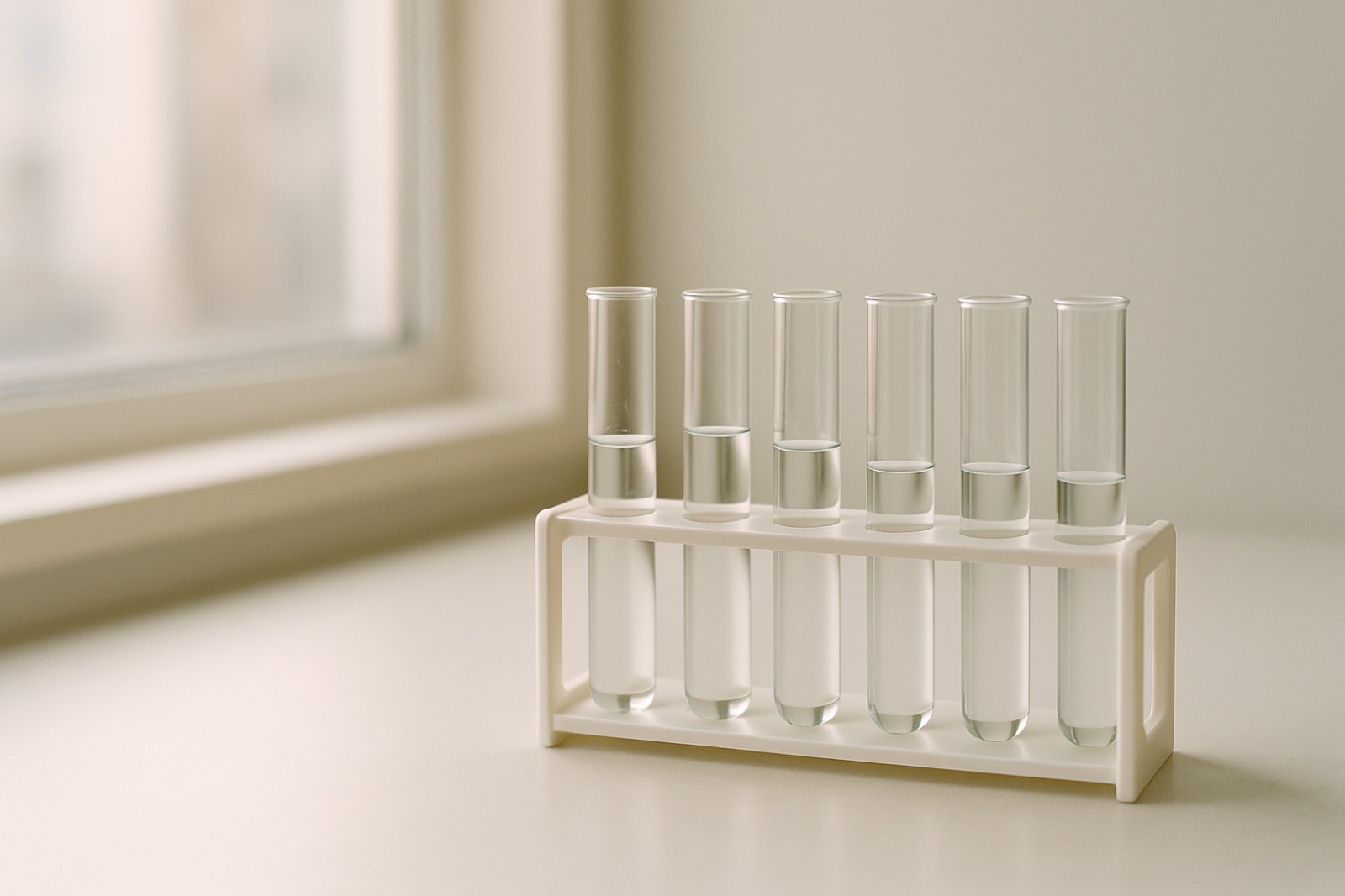
Water that leaves glassware cloudy, laundry stiff or faucets crusted is giving the homeowner useful evidence. It is not giving a complete diagnosis.
Those signs often point toward hardness, which is mainly associated with dissolved calcium and magnesium. Hardness affects cleaning, scaling and equipment performance. It does not establish whether water contains lead, nitrate, bacteria or another contaminant. The practical task is to separate a maintenance investigation from a health-related water-quality question before choosing a test or treatment device.
The distinction matters across a water sector that handles many different problems under the broad label of water quality. Water Finance and Management reports that WEFTEC will return to New Orleans from September 26 through September 30, 2026, with more than 23,000 registrants and 1,000 exhibitors expected. As WFM Staff describes it, the conference arrives amid a wide range of issues facing water. At household scale, that range is precisely why one symptom should not be treated as a universal diagnosis.
Start with the cleaning evidence
Hardness becomes a reasonable suspect when several cleaning and scaling clues occur together. Soap may produce less lather. A white or gray film may remain on fixtures, shower doors or cookware. Heating elements may accumulate mineral deposits. A dishwasher may require more detergent or rinse aid to deliver acceptable results.
These observations are most useful when they appear across the house. Similar deposits at several fixtures suggest a condition in the incoming water or a whole-house treatment problem. A deposit limited to one aerator, appliance or hot-water line can instead indicate a local maintenance issue.
Skin or hair complaints are weaker diagnostic evidence. Water hardness can change how soap behaves and how residue feels, but personal discomfort has many possible causes. It should not be used to estimate a hardness concentration or to infer contamination.
Use a two-column checklist
Put the evidence into two categories before ordering tests.
Hardness and maintenance indicators: recurring mineral crust, spotting after droplets dry, declining flow at scaled aerators, reduced soap performance, or deposits on water-heating equipment. These signs support measuring hardness and, depending on the problem, related parameters such as pH, alkalinity, iron or manganese.
Contamination concerns: a change in taste, odor or color, a plumbing disturbance, a known source-water incident, a private-well vulnerability, or a contaminant identified in a utility notice or previous laboratory result. These concerns call for tests selected around the specific risk. A hardness result cannot clear them.
Odor deserves particular care. Sulfur-like, musty or chemical odors can have different origins, including plumbing, a water heater or the source water. Record whether the odor occurs at one tap or many, and whether it appears in cold water, hot water or both. That information helps define the sampling plan, but it is not a substitute for analysis.
Know what the result can decide
Hardness is commonly reported as milligrams per liter or parts per million as calcium carbonate, and sometimes as grains per gallon. The result helps estimate scale potential, detergent demand and softener sizing. It is not a safety score.
Contaminant results require a different reading. Confirm the analyte, unit, reporting limit, sample location and applicable benchmark. A result marked nondetect does not mean that none exists. It generally means the laboratory did not detect the substance at or above its stated reporting threshold.
Municipal customers should first review the utility's current consumer confidence information and relevant notices. Private-well owners need a testing plan based on the well, local conditions and observed changes. When the concern cannot be resolved from existing records, the next step is to get local water professionally tested. The specific testing-page URL should be substituted once the client destination is confirmed.
Do not buy beyond the evidence
A softener can address calcium and magnesium. It is not a general contaminant barrier. Filters also differ by mechanism, capacity and certification, so a device marketed for taste or sediment should not be assumed to reduce an unrelated contaminant.
Interest in this distinction is substantial: Water Quality Wire recorded 3,887 page views, 1,506 visitors, 1,341 search crawls and 2,937 AI crawls in the supplied reporting period. Those figures show discovery activity, not treatment purchases or completed tests. No assist or customer relationship management data were supplied, so the numbers cannot establish what readers did next.
The useful household sequence is narrower: document the cleaning or scaling pattern, identify any separate contamination trigger, select tests for the actual question, and interpret each result only for the decision it can support.
For homeowners planning ahead, household appliance lifespans, ranked is a reasonable starting point.