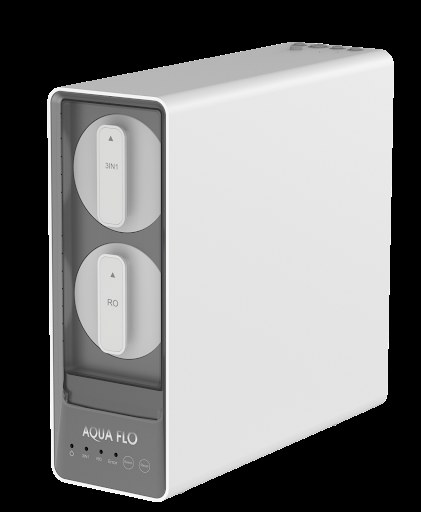
Reverse osmosis occupies a distinctive spot in residential treatment: it is the broadest-spectrum reduction technology a homeowner can put under a sink, and also the one most often installed with the least understanding of what it is doing. A working grasp of the mechanism helps professionals set expectations, size systems, and shorten the troubleshooting calls that follow.
The mechanism
An RO membrane is a dense polymer barrier rather than a sieve with holes. Feed pressure pushes water against the membrane; water molecules dissolve into and diffuse through the polymer while dissolved salts and most other solutes are rejected and carried away in a concentrate stream to drain. That last clause matters: RO is a crossflow process, and the reject stream is not a defect but the mechanism by which rejected material leaves the system. Traditional residential units send more water to drain than to the faucet, newer high-efficiency designs narrow that ratio considerably, and feed pressure, temperature, and backpressure from the storage tank all move it in practice.
The train around the membrane
A typical under-sink system is a small treatment train. A sediment prefilter protects everything downstream from particulates. A carbon prefilter removes chlorine, which would otherwise degrade the thin-film composite membranes used in nearly all modern systems. The membrane does the separation work into a small pressurized storage tank, and a final carbon polishing filter addresses any taste picked up in storage on the way to a dedicated faucet. Each stage has its own service interval, and the membrane's life depends heavily on how faithfully the prefilters are changed.
What it is for, and not for
Because rejection is broad rather than contaminant-specific, RO is the usual answer when the goal is comprehensive reduction of dissolved solids at a drinking water tap. Certified claims, however, are model-specific: NSF/ANSI 58 is the relevant standard for point-of-use RO, and professionals should verify that a given unit carries certification for the specific claims a customer cares about rather than assuming the technology implies them. RO is not a disinfection strategy on its own, it does not address dissolved gases well, and it is a point-of-use tool: it treats the glass, not the shower. For a broader view of where RO sits among membrane classes, see our membrane spectrum explainer.
Feed water decides outcomes
Most RO disappointments trace to feed water nobody tested. Hardness scales membranes; iron and manganese foul them; hydrogen sulfide and heavy sediment overwhelm prefilters sized for municipal supplies. On challenging water, the right answer is often pretreatment ahead of the RO rather than a bigger RO, and on private wells the sequencing question is genuinely a design exercise. Homeowners on difficult water tend to get better outcomes working with local RO specialists who test the feed water before quoting hardware, rather than shipping a boxed system into unknown chemistry.
Installation and service realities
The recurring installation issues are unglamorous. Drain connections need an air gap or a code-appropriate alternative. The storage tank's air charge needs checking, because a waterlogged tank mimics a failed membrane. Long refill times usually mean low feed pressure or exhausted prefilters rather than membrane death, and a TDS meter reading before and after the membrane settles most performance arguments in two minutes. Cold feed water slows production in ways customers interpret as failure every winter.
Taste is the last conversation. RO water is low in dissolved minerals, and some customers notice and dislike the flatness while others prefer it. Remineralizing cartridges exist for the first group. That is a preference discussion, not a performance one, and it goes better before installation than after.
None of this is exotic, which is precisely the point. RO under a sink is mature, well-understood technology that rewards routine competence: test the feed, size the pretreatment, respect the service intervals, and verify that certifications match the claims. The professionals who treat it that way spend very little time on callbacks.