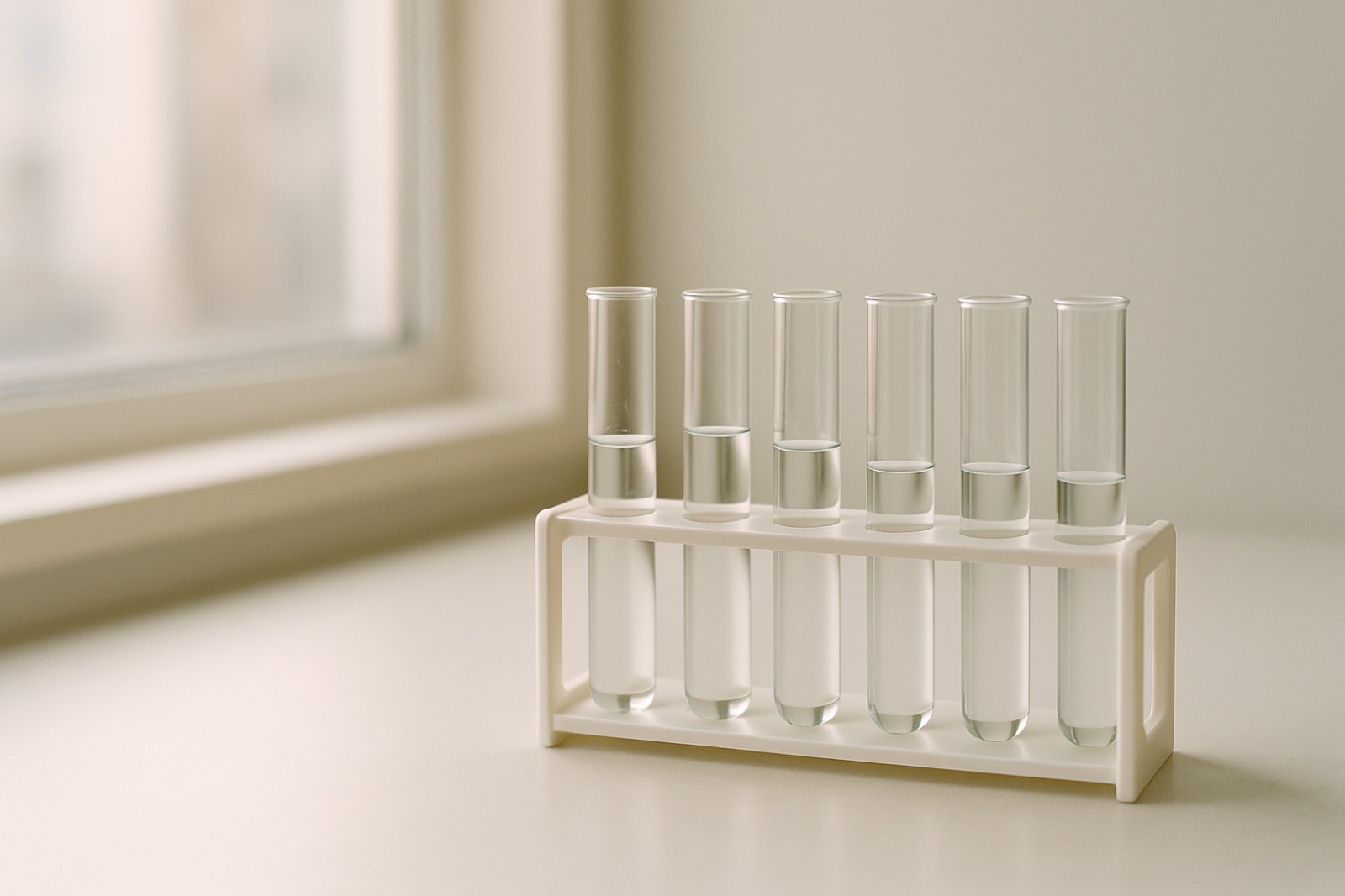
A laboratory can report precisely what was in a bottle without establishing why it was there. For homeowners, that distinction matters because water changes as it moves from the supplier, through a service line, across household plumbing, and through any treatment equipment.
The practical question is not simply whether to test. It is where to collect the sample and which household condition that location represents.
That responsibility is easy to misroute. Water Finance and Management, in its report on utility billing practices and customer service, notes that water and wastewater utilities often operate with lean budgets, tight staffing, and legacy billing systems. The story, by Meg Waters, concerns revenue collection, but it also points to a broader service reality: the first utility employee reached by a customer may not be the person equipped to investigate a water-quality complaint.
A homeowner can make that handoff more productive by separating observable hard-water effects from concerns that require supply information or laboratory analysis.
First classify the question
Hardness primarily describes dissolved calcium and magnesium. Its household effects are usually operational: scale on heating elements, deposits on fixtures, reduced soap performance, spots on glassware, and changes in how cleaning products behave. These signs can justify a hardness test, but they do not establish that a hazardous contaminant is present.
Contamination concerns belong in a different category. An unusual odor, sudden color change, nearby construction, flooding, a change in private-well conditions, or a notice from a water supplier may justify further investigation. Appearance and odor can help define the question, but neither can identify every substance of concern. Clear water is not a complete safety result, and cloudy water is not automatically evidence of contamination.
Skin discomfort is similarly nonspecific. Water temperature, soap, detergent residue, plumbing conditions, and treatment settings can all affect the experience. Treat it as a clue to document, not as a diagnosis of hardness or contamination.
Choose a tap that matches the question
For a general cold-water sample, use a frequently used cold tap and note whether the water has passed through a softener, filter, or other device. A result from treated water answers a different question than a result collected before treatment.
If the concern appears only at one fixture, collect information about that fixture before generalizing to the whole property. Remove and inspect the aerator if appropriate, note the plumbing material, and compare cold water at another tap. A localized result may point toward the fixture or an interior plumbing segment rather than the incoming supply.
If the issue appears only in hot water, a cold-tap sample alone will not evaluate the water heater or hot-water piping. Record whether the condition occurs immediately, after the tap runs, or only after water has remained unused. Do not place hot water in a laboratory bottle unless the laboratory has provided instructions for that sample type.
For treatment performance, paired samples are often more useful than a single bottle. One sample taken before the device and one after it can show whether the equipment changed the target measurement. The collection time, flow conditions, treatment settings, and recent maintenance should be recorded for both.
Know what the number can support
Read a result with four items beside it: the analyte, the unit, the reporting or detection limit, and the benchmark being used for comparison. A detection means the laboratory measured something under the stated method. It does not, by itself, identify the source, duration, or appropriate treatment.
A result reported below a laboratory limit does not mean the substance is absent under every condition. It means the method did not quantify it above that stated limit in that sample. Likewise, a hardness value can help size or adjust a softener, but it cannot answer an unrelated contamination question.
Before acting, confirm that the test panel covered the actual concern. A broad label such as basic water test may include hardness, pH, iron, or other common measurements while omitting a substance the homeowner had in mind. The laboratory should also provide collection, preservation, and delivery requirements. When the question is specific or the consequences of a wrong conclusion are substantial, get local water professionally tested using a panel and sampling plan matched to the concern.
The final checklist is short: define the symptom, determine whether it is house-wide or local, identify hot or cold water, mark every treatment device, select the tap accordingly, and record the sampling conditions. That information does not replace the test. It gives the result a question it can actually answer.