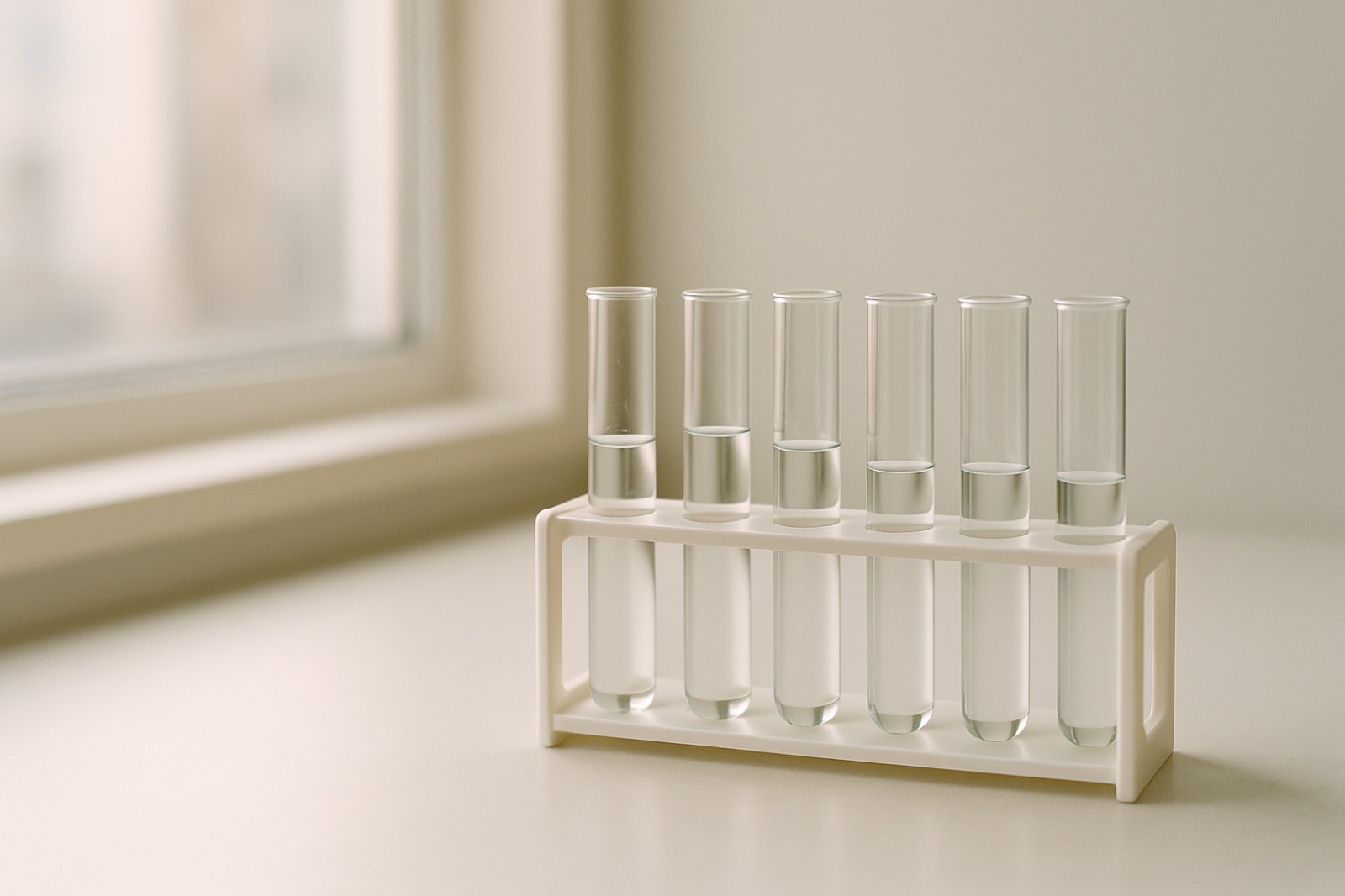
Water problems often enter a household through an appliance complaint: a water heater loses efficiency, glassware films over, or fixtures develop deposits. Those observations can justify investigating hardness. They cannot establish that the water is contaminated, and they cannot show where a problem originates.
That distinction matters before a homeowner buys treatment or collects a sample. Hardness and contamination are different questions. They may require different laboratory methods, different sampling points, and different responses to the results.
The professional water sector will have ample opportunity to discuss such distinctions when WEFTEC returns to New Orleans from Sept. 26 through Sept. 30, 2026. Water Finance and Management reports that more than 23,000 registrants and 1,000 exhibitors are expected at what it describes as North America's largest annual water quality conference. The WEFTEC 2026 preview also frames the meeting around the range of issues facing water. For households, that range is a reason to define the question before choosing a test.
Start with the location of the evidence
Deposits on heating elements, reduced soap performance, and recurring scale inside fixtures are consistent with elevated hardness. Hardness testing measures primarily dissolved calcium and magnesium. A result can help size or adjust a softener and explain mineral accumulation. It does not rule out bacteria, lead, nitrate, arsenic, volatile compounds, or other contaminants.
Location provides another clue. Similar mineral deposits throughout the house point toward the incoming water or a whole-house treatment issue. A problem confined to one hot-water fixture may involve the water heater, that fixture, or nearby plumbing. A metallic taste at one tap may warrant comparing that outlet with another location rather than treating the entire property on the strength of one observation.
These clues are diagnostic prompts, not substitutes for measurements. Skin discomfort, for example, is not specific enough to identify hardness or contamination. Cleaning difficulty can reflect hardness, detergent choice, water temperature, or equipment performance.
Match the sample to the question
Before collecting water, write down what the result must decide. A useful household sampling plan may include:
1. Test untreated incoming water when the question concerns the source supply or the load placed on treatment equipment.
2. Test downstream of a softener or filter when the question is whether that device is changing the water as intended.
3. Compare two taps when a concern appears limited to one plumbing branch or fixture.
4. Distinguish hot from cold water when the symptom occurs only after heating.
5. Follow the laboratory's container, flushing, preservation, and delivery instructions. Sampling technique can affect what the result represents.
For private wells, a broad concern about source water should not be reduced to a hardness test. For customers of a public system, the utility's water quality information can provide system-level context, but a premise-plumbing concern may still require sampling at the property.
Homeowners who need help defining analytes and locations should get local water professionally tested. The specific testing-page URL should be confirmed before publication.
Read each result within its limits
A hardness number generally supports an equipment or maintenance decision. It can indicate whether softening is likely to change scale formation and cleaning performance. It does not function as an overall safety score.
A contaminant result has a different meaning. Interpretation depends on the analyte, reporting unit, detection limit, sampling location, and applicable benchmark. “Not detected” usually means the laboratory did not measure the substance above its stated reporting limit. It does not mean that every possible contaminant was tested or that the concentration was necessarily zero.
A detected value also requires context. The first questions are whether the unit is correct, whether the result is repeatable, and whether the sample represents the source water, household plumbing, or treated water. Treatment selection should follow that interpretation, not precede it.
Use the smallest test that answers the whole question
The practical objective is not to order the largest available panel. It is to avoid a narrow test that cannot resolve the concern. Appliance and cleaning complaints may begin with hardness, alkalinity, pH, iron, or manganese, depending on the evidence. A contamination concern should be built around the source, local conditions, plumbing materials, and the substance in question.
A disciplined sampling plan separates three decisions: what to measure, where to collect, and what action a result could justify. That sequence keeps a common hard-water complaint from becoming an unsupported safety claim, while preventing a contamination concern from being dismissed as an appliance problem.