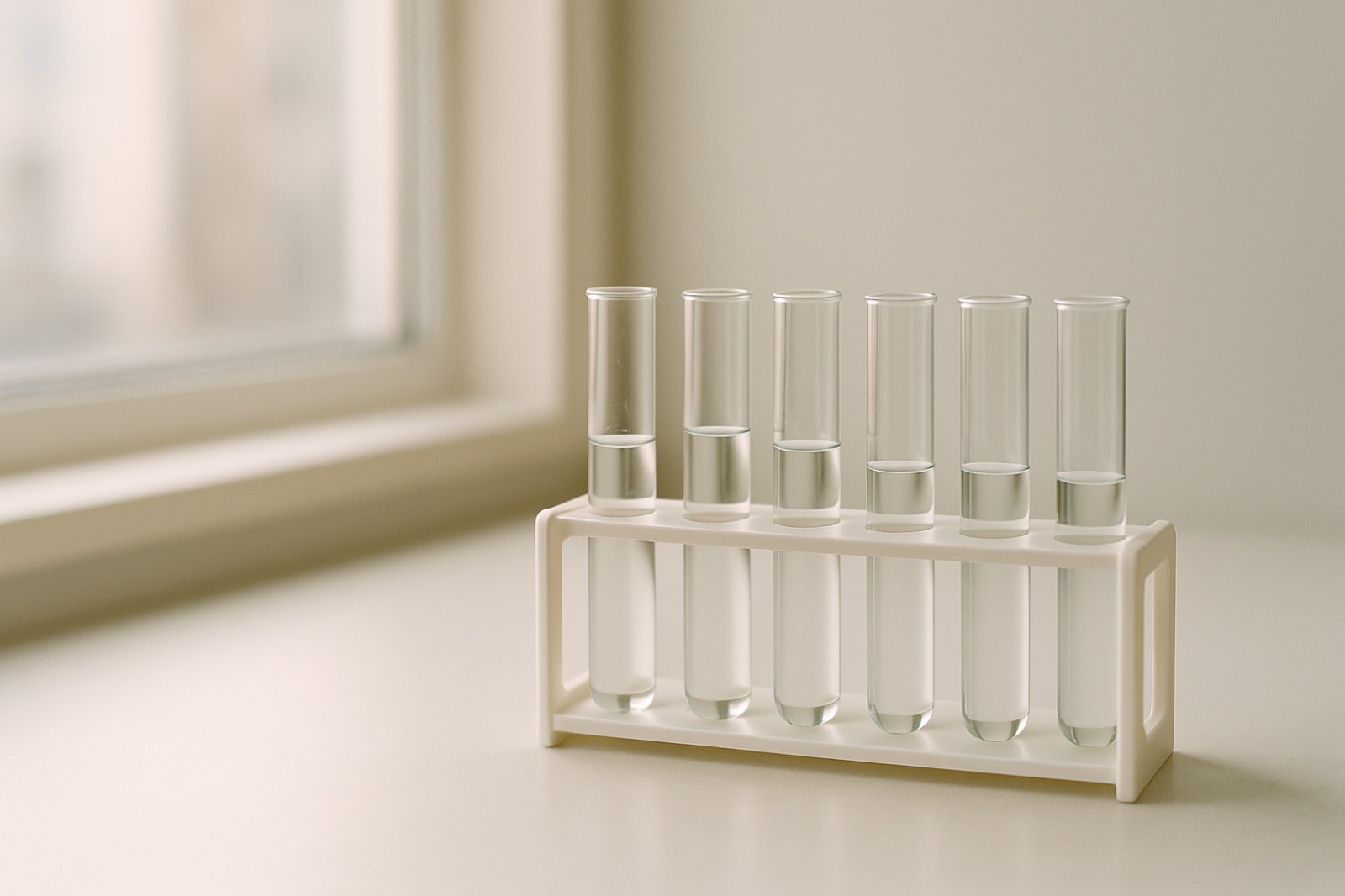
A homeowner can describe cloudy glassware, stiff laundry, dry-feeling skin and a failing water heater in one breath. Those complaints may share a water source, but they do not establish one cause. Some are useful clues about mineral loading and equipment performance. Others raise questions that only appropriate sampling and laboratory analysis can answer.
The distinction matters when conditions outside the house are changing. Circle of Blue recently examined the question in its report on what forest fires can mean for lakes. The story, credited to Circle of Blue, describes scientists studying wildfire effects on lake systems. It does not establish a specific risk for any household. It does illustrate why source-water questions and in-home performance complaints belong in separate diagnostic tracks.
Job one: explain what the house is doing
Begin with observations that can be checked without assigning a health meaning to them. Scale on heating elements, recurring mineral crust at fixtures, weak soap lather and spotting after water evaporates are consistent with hardness. They are not proof of contamination.
Use this checklist before ordering equipment:
1. Note whether residue appears after evaporation or is present in freshly drawn water.
2. Compare hot and cold water. A hot-water-only symptom directs attention toward the heater and hot-water piping.
3. Compare several fixtures. One affected outlet may indicate an aerator, faucet or local plumbing issue.
4. Record changes in detergent use, heater recovery, fixture flow and appliance maintenance.
5. Obtain a hardness result in clearly stated units, commonly milligrams per liter as calcium carbonate or grains per gallon.
A hardness result helps size and set certain treatment equipment. It does not determine whether the water is free of microorganisms, metals, nitrate, volatile compounds or other substances. Likewise, dry-feeling skin is too nonspecific to serve as a water-quality measurement. Water temperature, soap formulation, washing frequency and indoor conditions can also affect the experience.
Job two: investigate a defined contamination concern
Contamination testing should start with a reason, not a generic request to test for everything. The reason may be a change in odor or appearance, a private-well event, a known local land-use concern, a utility notice, plumbing materials in the building or an unusual result from an earlier sample.
For that track, use a different checklist:
1. Write down the concern and the date it began.
2. Identify the water source and whether the property uses utility water or a private well.
3. Ask the utility, local health authority or qualified laboratory which analytes and sampling methods fit that concern.
4. Confirm whether the sample must come from first draw, after flushing, before treatment or after treatment.
5. Use the laboratory bottle, preservative, holding time and delivery instructions provided.
6. Compare the result with the applicable regulatory value, health-based guidance or laboratory reference, recognizing that these are not interchangeable.
Homeowners who need sampling help should get local water professionally tested. The test scope should name the question it is intended to answer.
Read the result as a decision document
First, check the analyte, unit and reporting limit. A result expressed in micrograms per liter cannot be compared directly with a benchmark stated in milligrams per liter without conversion. “Not detected” usually means the laboratory did not measure the substance at or above its stated reporting threshold. It does not mean absolute zero.
Next, check where and when the sample was collected. A kitchen-tap result represents that location under the stated sampling conditions. It may not describe the source, every fixture or water quality at another time.
Finally, separate treatment verification from initial diagnosis. If equipment is installed, paired samples collected under a defined procedure can show what changed across that equipment. Performance should be evaluated for the specific constituent or property the device was selected to address.
Why the distinction earns attention
A reporting snapshot supplied for Water Quality Wire shows 3,887 page views, 1,506 visitors, 1,341 search crawls and 2,937 AI crawls. No assist or customer relationship management data were supplied, so those figures indicate discovery activity, not treatment purchases or resolved household problems.
The useful conclusion is narrower. Readers are looking for ways to decide whether poor water quality is affecting appliances, plumbing, cleaning or personal comfort. The first answer is not a product category. It is a disciplined separation between mineral-performance evidence and contamination evidence, followed by a test designed for the question actually being asked.