Extreme heat can increase household water use and put added attention on water reliability. The Guardian community team reported on September 11, 2026, that the United States experienced a summer of record heat and rolling heat domes. That context may prompt homeowners to inspect water, plumbing and appliances more closely. It does not, by itself, identify a water quality problem.
The practical question is whether a complaint points to hardness, a treatment or plumbing issue, or a contaminant that can only be evaluated through testing. Appearance, odor and appliance performance can guide an investigation, but they rarely establish the answer alone.
Signs that fit a hardness pattern
Hard water contains elevated concentrations of dissolved calcium and magnesium. As water heats or evaporates, those minerals can form scale. Common clues include white or pale deposits on faucets, shower doors and heating elements, along with recurring spotting on glassware.
Hardness can also reduce soap lather and contribute to residue on fixtures or fabrics. Water heaters, dishwashers and other equipment that heat water may lose efficiency as scale accumulates. These effects concern maintenance and cleaning performance. Hardness is not, by itself, evidence that the water contains a hazardous contaminant.
Pattern matters. Deposits appearing gradually at hot-water fixtures fit mineral scaling better than a sudden change affecting every tap. A problem limited to the hot side may direct attention toward the water heater. A chalky residue that dissolves in a mild acid is more consistent with carbonate scale than with sediment, although that informal observation is not a substitute for analysis.
Signs that require a different track
Some observations should not be assigned to hardness without further investigation. A sudden change in color, taste, odor or clarity calls for a timeline: when it began, whether hot and cold water are affected, which fixtures show it, and whether nearby plumbing or utility work occurred.
Blue-green staining may involve copper corrosion. Reddish or brown staining may involve iron, manganese, sediment or pipe disturbance. A rotten-egg odor can arise from several points in a water system, including the source, plumbing or water heater. None of these observations identifies concentration, origin or health significance.
Some contaminants offer no sensory warning at all. Clear water with no unusual taste or odor can still require testing when a household uses a private well, receives a relevant utility notice, experiences flooding near a well, or has reason to suspect a specific plumbing material or nearby source. Conversely, objectionable taste or staining does not automatically mean the water presents a health risk.
When testing is worth the next dollar
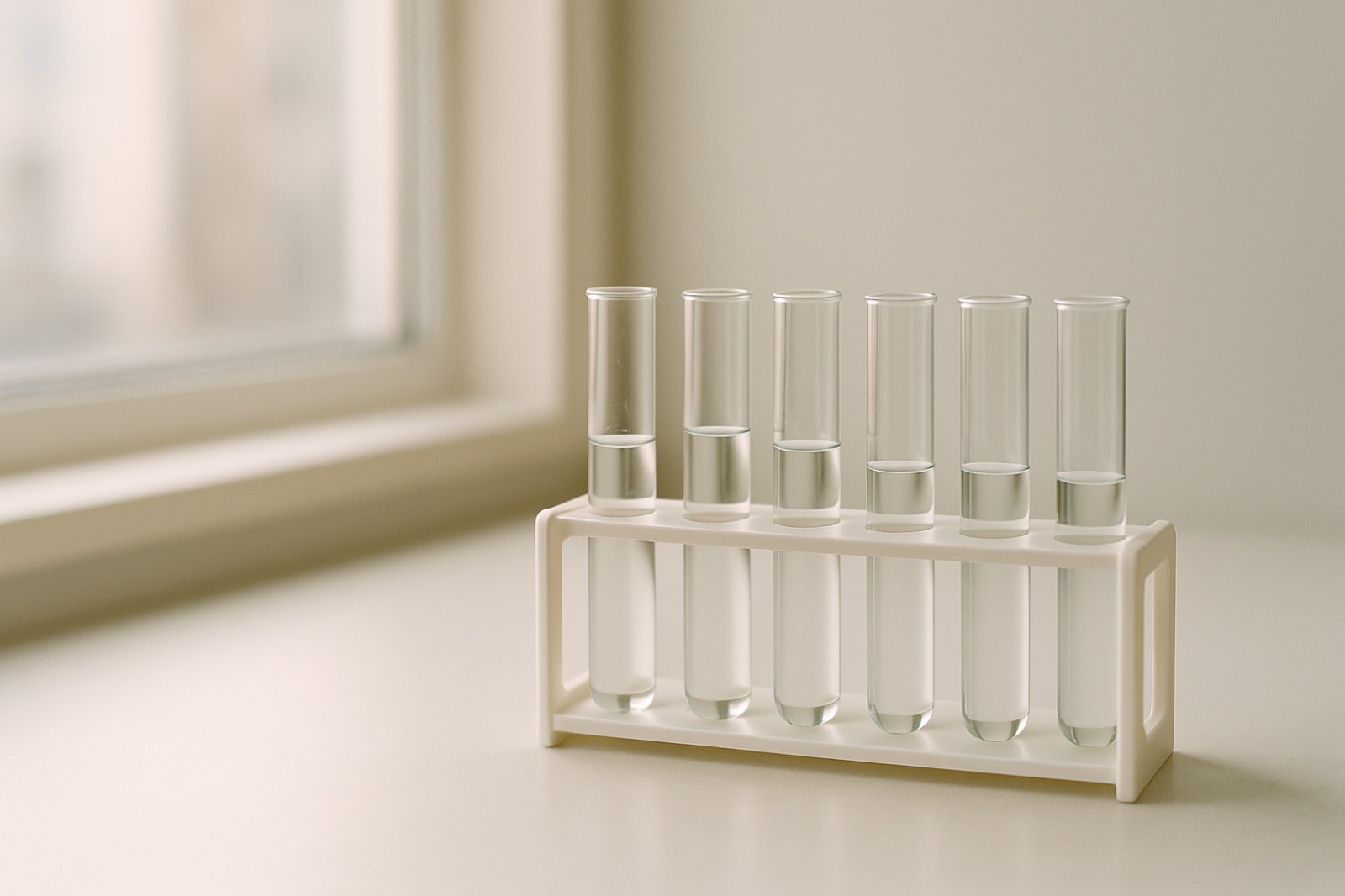
Testing is most useful when the question is defined before the sample is collected. For scale and soap performance, request hardness, typically reported as milligrams per liter as calcium carbonate or grains per gallon. For staining, the appropriate panel may include iron, manganese, copper, pH and alkalinity. For a private well, microbial and locally relevant chemical testing may also be appropriate.
Use a certified laboratory where certification applies, and follow its sampling instructions. The sampling location matters. A first-draw sample can answer a different question from a flushed sample, while water collected after treatment cannot describe untreated source water. Home screening strips can help narrow a maintenance question, but they should not be treated as equivalent to a laboratory result when decisions involve contaminant exposure.
Homeowners who need a defensible baseline should get local water professionally tested before selecting equipment. The test request should identify the water source, observed symptom, affected fixtures, timing and any existing treatment devices.
Read the result before choosing treatment
A laboratory number has meaning only alongside its unit, reporting limit, sample location and comparison value. Hardness results describe scaling potential and treatment sizing. A detection of another constituent does not automatically establish that treatment is necessary. Compare the concentration with the applicable drinking-water standard or advisory and determine whether that benchmark applies to the water source and intended use.
The response should follow the finding. A softener exchanges hardness minerals and may address scale, but it is not a general contaminant barrier. Activated carbon, oxidation, membrane treatment and disinfection solve different problems and impose different maintenance requirements. No device should be selected merely because several unrelated symptoms occur together.
This distinction matches demonstrated reader demand. Water Quality Wire recorded 3,887 page views, 1,506 visitors, 1,341 search crawls and 2,937 AI crawls in the supplied period. No assist or customer relationship management data were supplied, so those figures show discovery activity rather than treatment purchases or resolved complaints. The useful editorial response is therefore a diagnostic sequence: document the pattern, define the question, collect the right sample and let the result determine the next step.